
Solve The Cube Zero Assist Tips: How to Solve Real Scrambled Cubes
Solve The Cube zero assist tips focus on applying real Rubik's cube algorithms manually rather than relying on prompts. You must inspect the scrambled cube, identify the case, and type execution sequences accurately from memory to beat rivals in competitive races.
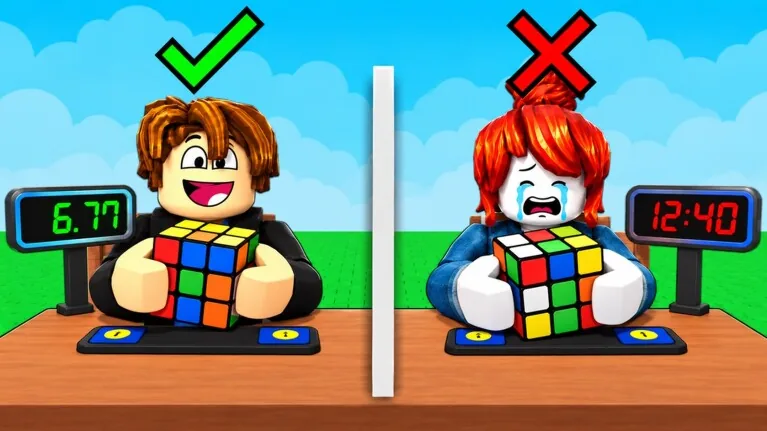
Solve The Cube zero assist tips focus on applying real Rubik's cube algorithms manually rather than relying on prompts. You must inspect the scrambled cube, identify the case, and type execution sequences accurately from memory to beat rivals in competitive races.
Understanding Zero Assist Mechanics
In Solve The Cube by Guess the Studios!, the core race format challenges two players to solve a cube under race conditions. While default matches present a key sequence for players to commit to memory and type out under pressure, selecting zero assist switches the puzzle into an authentic scrambled state. The game requires you to inspect the face layouts and determine every turn on your own.
Because the experience supports different cube types using authentic mechanics, solving without assistance demands a firm understanding of real cube rotations. Instead of following on-screen sequence displays, you input raw notation commands directly into the prompt to manipulate the cube faces toward a solved state.
Mode Comparison and Match Options
Choosing the right format depends on your familiarity with standard cube notation and speedcubing patterns.
| Mode Option | Target Player Style | Solving Requirement |
|---|---|---|
| Standard Race | Pattern memorizers and speed typists | Type a displayed key sequence from memory |
| Zero Assist | Experienced cubers and puzzle solvers | Solve a real scrambled cube using personal algorithm knowledge |
| Practice Session | Players learning notation and turns | Test inputs without active rival pressure |
Selecting zero assist removes assistance cues, meaning every single move must come from your own solution plan. If you hesitate during inspection or fail to track piece placement, your rival can finish earlier and claim the round win.
Algorithm Execution and Memory Typing
Winning in zero assist requires bridging cube knowledge with swift keyboard execution. The game's system operates on typing from memory, translating real speedcubing logic into rapid keystrokes.
- Plan first-stage turns during the opening seconds of the scramble inspection.
- Apply standard speedcubing algorithms for layer-by-layer or face orientation stages without pausing between inputs.
- Keep finger placement centered on the movement keys to avoid typing errors, as incorrect commands add unnecessary turns to your solve time.
- Track edge and corner locations across cube turns to execute subsequent algorithm sets without re-evaluating the entire cube.
Every movement directly affects the 3D model, so precision remains just as critical as raw speed. Entering wrong turn letters forces you to reverse steps, losing ground in fast rounds.
Round Economy and Badge Achievements
Finishing cubes quickly in public servers of up to 30 players advances your record and profile milestones. Winning rounds awards Coins, which you can spend on cosmetic cube skins and stool crates to customize your station between matches.
High-level speed and consistency also unlock specific game badges:
- First Win: Awarded when you secure your first match victory on the server.
- On Fire!: Unlocked after achieving a 3-game win streak against opponents.
- Sub 5 badge: Earned by completing a solve in under 5 seconds.
Clean inputs and memorized algorithmic executions allow you to lower solve times steadily, maintain multi-game streaks, and collect round rewards across competitive sessions.