
Solve The Cube Typing from Memory: Turn Inputs and Mode Differences
Solve The Cube typing from memory requires players to memorize a designated turn sequence, enter it accurately on the keyboard to rotate the puzzle, and complete the solve ahead of a racing opponent.
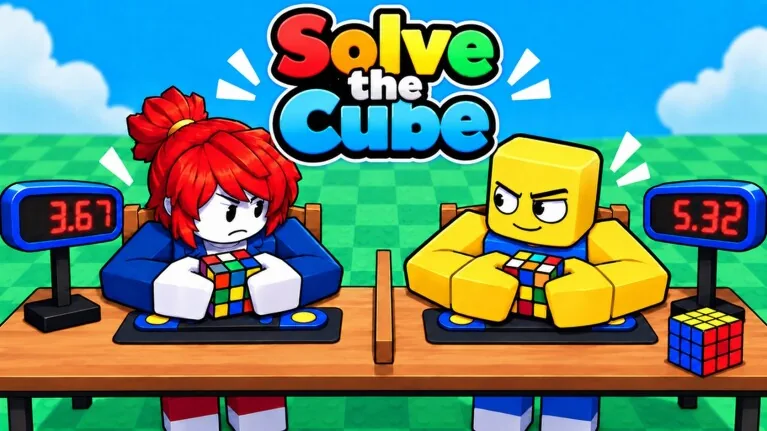
Solve The Cube typing from memory requires players to memorize a designated turn sequence, enter it accurately on the keyboard to rotate the puzzle, and complete the solve ahead of a racing opponent.
Core Input Mechanics and Memory Turns
Matches place competitors into head-to-head speed contests within servers supporting up to 30 players. The base match format displays a sequence of movements that the player must commit to memory before the puzzle phase begins. Once the round starts, the display hides the sequence, requiring you to enter the correct key sequence directly from memory to execute turns.
Each correct keystroke translates into a rotation of the cube faces. Typing quickly without errors ensures consistent rotations, while mistyped inputs disrupt rotation flow. Understanding how to turn the cube under time constraints determines whether you outpace your rival in close races.
Choosing Between Memory Races and Zero Assist
The experience offers two distinct approaches to solving: sequence memorization races and manual puzzle handling. Players who prefer executing raw Rubik's algorithms without prompt assists can switch to manual solving.
| Mode Option | Target Player Goal | Core Execution Requirement |
|---|---|---|
| Standard Match | Outspeeding an opponent in an active duel | Recalling the displayed key sequence and entering it accurately from memory |
| Zero Assist Mode | Solving an unassisted scrambled cube independently | Applying standard Rubik's cube algorithms directly without pre-set typing prompts |
In Zero Assist mode, the game presents a authentic scrambled state across supported cube types. Rather than recalling a short predetermined keystroke set, players apply genuine cubing methods to evaluate the scrambled pieces and manually execute the required rotations. Players who prefer testing real puzzle knowledge choose this option, whereas standard servers focus primarily on rapid keystroke recall.
Milestones, Multipliers, and Match Rewards
Winning races earns Coins, which serve as the primary currency for cosmetic unlocks. Players can visit the in-game shop to spend Coins on alternative cube patterns or open cosmetic crates to obtain custom seats, such as cake stools or themed chairs.
Speed and consistency reward specific progression badges:
- First Win: Awarded upon completing your first race victory against an opponent.
- Sub 5 badge: Awarded when you finish an entire cube solve in under 5 seconds.
- On Fire badge: Unlocked by securing a 3-game win streak.
Players seeking faster progression can purchase optional passes using Robux. Available shop passes include x2 Coins (79 Robux), x2 Wins (79 Robux), x2 Streak (59 Robux), the Exclusive Pack (149 Robux), and VIP status (499 Robux). These bonuses accelerate leaderboard progress and cosmetic crate purchases without altering the underlying rotation mechanics.