
Solve The Cube Cubing Experience Required: Skill and Mode Guide
Solve The Cube does not strictly require prior Rubik's cube experience for standard rounds, because players can memorize and type a given key sequence. However, tackling the Zero Assist mode demands genuine puzzle-solving ability with real algorithms on scrambled cubes.
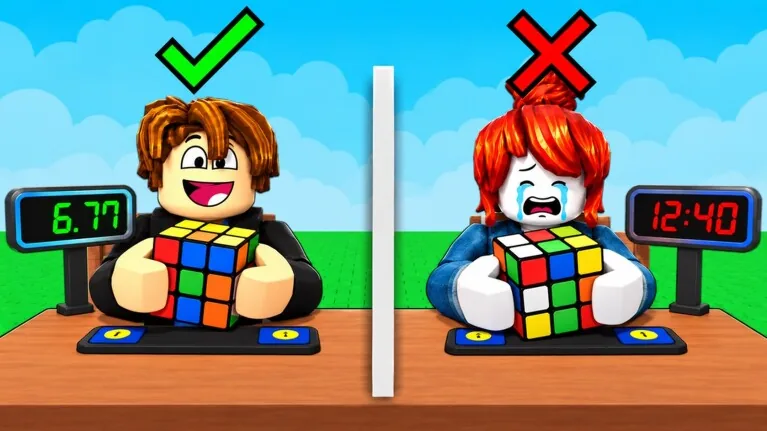
Solve The Cube does not strictly require prior Rubik's cube experience for standard rounds, because players can memorize and type a given key sequence. However, tackling the Zero Assist mode demands genuine puzzle-solving ability with real algorithms on scrambled cubes.
Skill Requirements by Playstyle
The game accommodates both newcomers and experienced speedcubers through distinct mechanics. In standard match formats, the system presents a sequence of inputs. Progress relies on typing from memory rather than calculating face rotations on the fly. Players read the required keys, recall them under time pressure, and enter them rapidly to turn the sides and finish ahead of competitors.
For players with authentic speedcubing backgrounds, the game provides a dedicated setting. Selecting zero assist disables automated prompts and presents an authentic scrambled puzzle. In this state, knowledge of standard notation, layer progression, and solution stages determines how quickly the cube returns to its solved state.
| Mode Option | Best For | Requirement |
|---|---|---|
| Standard Sequence Typing | Beginners and fast typists | Memorizing key sequences and entering inputs under match pressure |
| Zero Assist Solving | Experienced cubers and speedcubers | Independent solving knowledge using algorithms without on-screen prompts |
| Competitive Match Play | Badge hunters and streak builders | Speed execution across multiplayer races against live opponents |
Applying Real Cubing Knowledge
The experience incorporates real-world cube structures, noting that different cube types in the game function using the same real algorithms found on physical puzzles. Familiarity with standard cubing terminology allows experienced players to anticipate turns and recognize patterns instantly when handling unscramble sequences.
Speedcubers aiming for top placement in server lobbies can transition their mechanical recognition into fast clears. Earning prestigious achievements like the Sub 5 badge demands finishing a cube in under five seconds, which pairs rapid finger speed with either instantaneous sequence recall or flawless manual execution.
Demands for Non-Cubers
Players with no background in Rubik's cubes can still win matches and collect streak bonuses. The baseline loop tests pattern memory and input precision above spatial calculation. By observing the prompted sequence and entering the keystrokes without hesitation, any participant can turn the virtual cube efficiently.
Because servers host up to 30 players in shared puzzle competition, success often comes down to composure. A player who types accurately without second-guessing will routinely beat an opponent who hesitates during their sequence. Real cubing knowledge remains an optional asset for advanced modes rather than an absolute barrier to entry.